This is the story of a working class
family
Esta es la historia de una
familia de clase obrera
The recordings that you are about to hear, in Spanish, were made in Santiago of Chile in January 2006 by the English ethno-musicologist Dr Jan Fairley:
Listen in Spanish (escuchar en castellano) the testimony of: Alberto Rodriguez Gallardo, the son of Catalina Gallardo Moreno and Rolando Rodriguez Cordero and "Señora" Ofelia Moreno de Gallardo, grand mother of Alberto. (1, 2)
Related items linked to the above story
"El Mercurio" is the most important paper in Chile. It does not mean, however, that is the most reliable. There is famous saying in Chile "El Mercurio miente" ("The Mercurio tells lies").
Mercurio 23rd of November of 1975, is a song I wrote in Glasgow during the 1970s and it is about a confrontation between members of the Gallardo family and others and members of the Armed Forces. The story about lies, because the confrontation never took place, appeared in Chile in the right-wing newspaper: "El Mercurio" on the above date.
The newspaper's owner Agustin Edwards played a villainous role in our
country during the 1970s. It is known that Edwards met Henry Kissinger
and CIA Richard Helm to seek help about how to prevent, the Socialist
Salvador Allende, to take up his mandate. It is also known that the paper
received CIA money to destabilise the socialist Government of Salvador
Allende.
During the Pinochet's dictatorship the paper was seen as acting on their
behalf by misinforming its readers. Many Chileans pay dearly for it and
among them: the Gallardo family and others.
Click HERE to watch (in Spanish - en castellano) "El Diario de Agustin": a recent awards winning documentary made in 2008 in Chile about the controversial Agustin Edwards and his newspaper.
Letter from Isabel Gallardo to Sr. Ricardo Núñez
Isabel Gallardo is an aunt of Alberto Gallardo. The letter below, written by Isabel, reveals publicly her indignation to the suggestion made, by some members of the present democratic government of La Concertación, that the victims were guilty and that the victim's relatives were seeking revenge.
Isabel asked Mr Vidal, a Government minister, if to ask for justice was to seek vengeance. Isabel had five members of her family assassinated by agents of the Pinochet's regime. The accused are: Marcelo Moren Brito, Francisco Ferrer Lima, Miguel Krassnoff Marchenko, Manuel Contreras Sepúlveda, Ernesto Baeza Michelsen. Isabel said that these people never had the decency of apologising for what they have done to her family and others.
Isabel old mother met Baeza once and he suggested to her mother that she was insane and that her children and husband never existed.
A raíz de las consecuencias de conocer el mensaje de Ricardo Lagos anunciando que el Informe de la Comisión de Prisión Política y Tortura ya se encuentra en la Internet y a raíz de todo lo que ha ocurrido después de eso hasta hoy, deseo manifestar mi opinión como familiar directo de 5 ejecutados políticos de la dictadura de Pinochet. Respondiendo de alguna manera al soéz postulado de algunos de que el Golpe de Estado de 1973 fue inevitable y que en definitiva deberíamos hacer un mea culpa por la conducta anti ética de los militares con sus prisioneros, yo insisto en que las víctimas no son los culpables; no pueden ser los culpables, de otra manera, no serían víctimas. Nadie se buscó ser maltrado como lo hicieron, tampoco. Creo que los hechos hablan por sí solos, como en el caso de mi propia familia, asesinada entre el 18 y el 19 de Noviembre de 1975: la Familia Gallardo con 5 y 1/2 miembros del grupo familiar muertos en horrorosas torturas en Villa Grimaldi (contando con el bebé de mi hermano que venía en camino y fue muerto por tortura en el útero de mi cuñada).
Ellos fueron tomados presos repentinamente con extrema violencia; sacados de su casa; llevados a Investigaciones donde su jefe era Ernesto Baeza Michelsen, y en pocas horas secuestrados. Después de mucho se supo que habían sido trasladados al centro de torturas del ejército llamado Comando Terranova (Villa Grimaldi) donde fueron vistos por testigos sobrevivientes del horror.
Sin embargo al día siguiente de su detención aparecen muertos en un enfrentamiento. Según algunos medios de comunicación a través del periodista Julio López Blanco, estos "subversivos" se habían enfrentado a muerte con las "fuerzas del orden" parapetados en los Cerros de Rinconada de Maipú. (Lugar que en esos días también pasó a pertenecer al ejército). Cabe preguntarse de dónde habrán sacado estos "subversivos" las fuerzas, las armas y las capacidades para enfrentarse a los super entrenados, bien organizados, bien premunidos y cuantiosos agentes de la DINA, para librarse de las fauces de sus aprehensores desde la Villa Grimaldi para llegar a los cerros de Rinconada de Maipú. Cualquiera que conoce la geografía de nuestro Gran Santiago, se da cuenta que ese desplazamiento, incluso hoy con todos los adelantos en materia de carreteras, no es tan fácil. Más aún tomando en cuenta quienes eran los "subversivos" en cuestión. Ellos eran los siguientes:
Mi padre: Alberto Gallardo Pacheco, 62 años de edad, tornero de profesión. Sufría de escoliosis severa, lo que le impedía respirar bien, le venían ahogos constantes porque no podía mantener su columna derecha mucho rato, a raíz de daños laborales sobre su espalda.
-Mi hermana, Catalina Gallardo Moreno, 29 años. Secretaria de Manpower. Con un bebé de 6 meses al que todavía amamantaba. Una joven mujer con hermosos ojos de color oscuro profundo con miles de sueños y utopías por realizar.
-Mi cuñada: Mónica Pacheco Sánchez, 25 años, profesora de inglés en un colegio municipal. Embarazada de tres meses (segundo intento -alcanzó a gestar un bebé que nace a los 8 meses de gestación pero muere a los pocos días precisamente a pocos días del golpe militar, al parecer no soportó la tensión emocional).
-Mi hermano: Roberto Gallardo Moreno, 25 años. Recién egresado
del servicio militar. Servicio que tuvo que hacer atrasado porque el régimen
militar obligó a hacer el servicio a los reservistas que por algún
motivo no lo habían podido hacer en su momento. Como mi hermano
era sano fue obligado a hacerlo. Ahí fue testigo de muchos hechos
reñidos con la moral, pero no se quedó sin hacer nada.
Y al año siguiente, el 20 de Octubre de 1976, también mi
cuñado: Juan Rolando Rodríguez Cordero, fue herido en un
falso enfrentamiento en la calle; llevado a un hospital por agentes de
la DINA de donde salió muerto.
oy a 29 años de su asesinato en torturas, todavía estamos esperando la acción de la Justicia en este caso que tiene múltiples testigos. Y que generosamente nos han dado testimonios del martirologio sufrido por mi familia.
¿Acusados de qué?. No se les hizo ningún tipo de procedimiento judicial ni siquiera uno falso antes de matarlos. Fueron sometidos a toda clase de torturas, como consta en el Informe Rettig, y ni siquiera pudieron contar con un entierro digno. Los cadáveres registraban evidentes muestras de tortura. En particular me duele que a mi hermana le hayan arrancado los ojos y le dejaron las cuencas vacías porque sus ojos eran llamativamente brillantes.
Nosotros hemos denunciado reiteradas veces quienes fueron sus torturados; nombres que casualmente se repiten: Marcelo Moren Brito Francisco Ferrer Lima Miguel Krassnoff Marchenko Manuel Contreras Sepúlveda Ernesto Baeza Michelsen y otros agentes de menor rango que los anteriores. Nunca ninguno de los involucrados han dado siquiera un gesto de arrepentimiento por lo que hicieron, ni menos se nos ha explicado qué delitos cometieron las víctimas para merecer tales castigos. Por el contrario, en un careo de mi madre con Baeza, hace algunos años, éste le dio a entender que ella estaba loca y que tal vez sus hijos y su esposo nunca existieron. O sea, burla y más burla.
Ahora me pregunto si con todos estos antecedentes todavía se atreven a decir que "las víctimas se lo buscaron..." y que lo que los familiares buscamos después de 29 años ¿es venganza? ¿Pedir Justicia es buscar venganza, Sr, Vidal?
Yo nunca he escuchado a mi madre -hoy de 79 años, con ánimo vengativo. Nunca, durante su larga lucha por Verdad y Justicia; nunca la he escuchado pedir que a los torturadores de mi familia los cuelguen de los testículos como lo hicieron con mi padre. Sólo le he escuchado decir: ¡Ay! Ojalá algún día se reconozca que mi viejo y mis hijos no fueron delincuentes ni gente de mal vivir y se limpien sus nombres. Así podré ir y mostrarlo a quienes me apuntaban con el dedo y se mofaban.
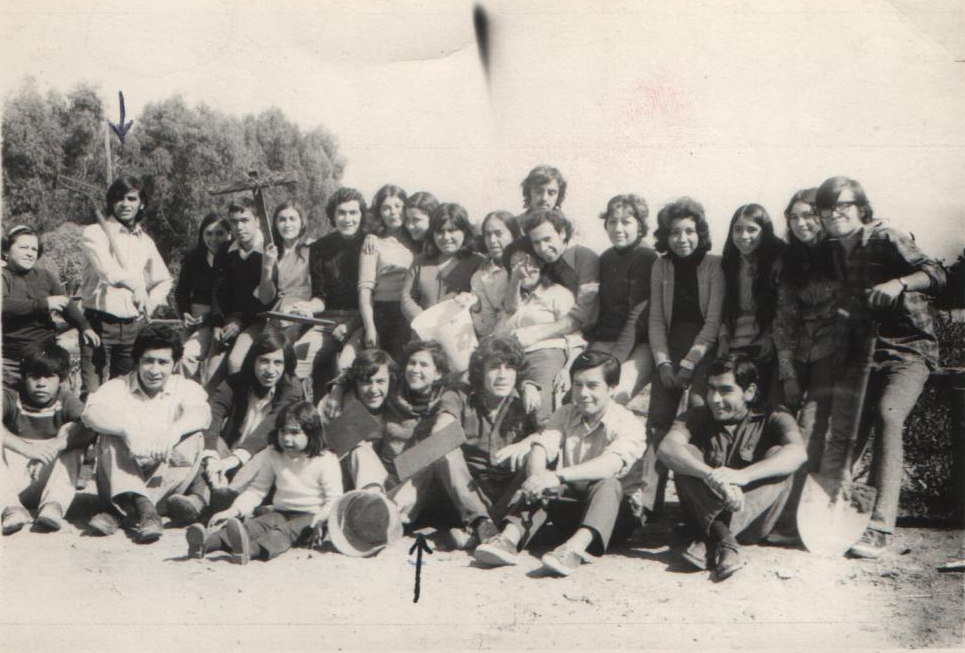
I was living in Glasgow when I learned something terrible. A friend sent me from Paris the pro-Pinochet newspaper El Mercurio. I began to read it eagerly and in one of its pages I found something that interested me very much. I read that a group of "extremists" had been killed by the Army at Maipu in the periphery of Santiago. In the group mentioned, to my astonishment, there were a number of people from our barrios and members of La JOC. (Juventud Obrera Católica) The group mentioned included my good friend Catalina Gallardo, her father Alberto Recaredo and her brother's wife, Monica Pacheco (in centre with skirt) who was three months pregnant. Their detention took place on the 18th of November of 1975 and their assassination took place the day after. In a separate incident, Catalina's brother Roberto Gallardo and husband of Monica had been killed by the Army on the 17th of November of 1975. I found it bizarre that my friends were called "extremists" by The Mercurio. In any case if the new was true the so called "extremists" were fighting for freedom suppressed by the Armed Forces led by Augusto Pinochet who showed to have little respect for human dignity, our democratic tradition and our constitution. Soon I learned the truth about their death: A Chilean refugee living in Edinburgh, who had been held prisoner at the notorious Villa Grimaldi, told me that my friends had been taken, by force, to the area of Maipu but not before they had been tortured and killed at Villa Grimaldi. My friends, therefore, never had any armed encounter with the Army Forces at Maipu. Everything had been fabricated and the Mercurio, a CIA backed newspaper, was at hand to distortion reality. This horrendous news makes me feel sick and fills me with anxiety and anger for El Mercurio, the Chilean Army, the police and Pinochet. The National Truth and Reconciliation Commission known as the Rettig Commission in Chile: "came to the conclusion that all these people listed above were executed by DINA agents in violation of their human rights".
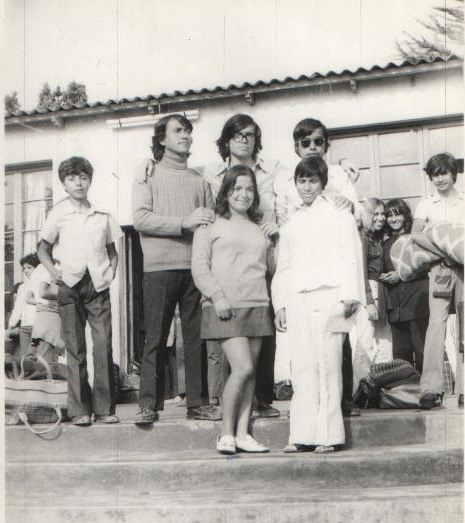
Dr Sheila Cassidy, the English doctor detained and tortured at Villa Grimaldi in 1975 for assisting an injured opponent of the Pinochet regime, speaks about this horrendous crime in her book Audacity to Believe. (There is available a statement, submitted in evidence by Dr Cassidy to the United Nations, 20 January 1976, in which she relates in detail her experiences at the hands of Pinochet's agents from -DINA). On the 20th of October of 1976 Rolando Rodriguez Cordero and Mauricio Jean Carrasco were also killed by Pinochet's men. Rolando, a friend of mine since my childhood, was the husband of Catalina Gallardo, killed in 1975. I also knew Mauricio as a gentle person. According to the Rettig Commission, Mauricio and Rolando were sitting on a bench on the sidewalk when a convoy of vehicles stopped in front of them and a man got out of a car and without saying a word opened fire on them. One was killed instantly, and the other was left wounded and died later…"the commission has drawn enough evidence to come to the conviction that these two men were executed by government agents in violation of their human rights". I have fond memories of all these people as wonderful and generous human beings who gave me a lot in terms of friendship and political awareness. When I left Chile in 1974, I took with me a bunch of photographs showing my JOC friends among them Rolando, Catalina, and Monica with happy smiles on their faces as if to say, we are all enjoying life.